What is Effective Reading Fluency?
This is the ability to read a text accurately, at anappropriate pace, and with proper expression. Fluency acts as the critical bridge between word recognition and true comprehension. When a student reads fluently, they are no longer expending all their cognitive energy on decoding
(sounding out) individual letters and syllables. Instead, word recognition becomes automatic, freeing up the brain to focus entirely on understanding what the text actually means. Because reading struggles and backgrounds vary, "effective fluency" can feel and look different depending on a person's experience:
- For Developing Readers: It feels like turning a bumpy road into a smooth highway. It means moving away from choppy, word-by-word reading and beginning to group words into meaningful phrases, making the text sound like natural speech.
- For Students with Reading Delays or Dyslexia: It is about reducing the exhausting cognitive load. For these learners, fluency isn't about reading fast; it is about achieving a level of comfort and accuracy where they do not lose the meaning of the sentence by the time they laboriously reach the final word.
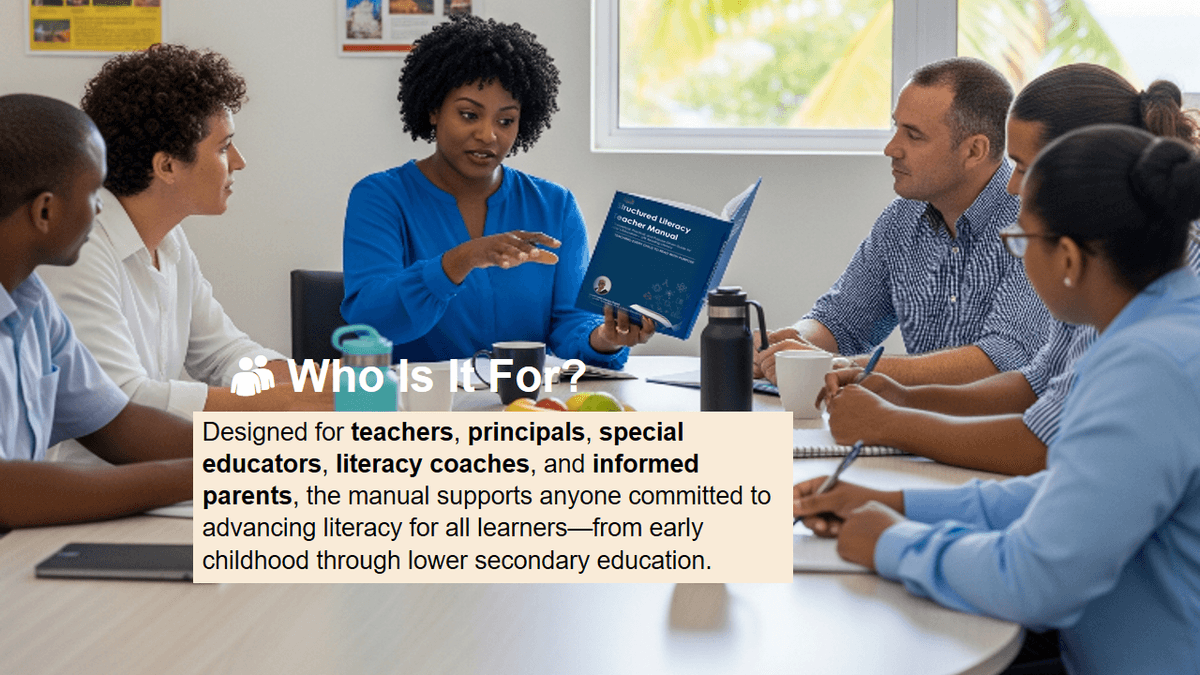
- For Educators and Parents: It looks like shifting from listening to a child "mechanically decode" to hearing them read with prosody—the natural rhythm, inflections, and pauses that show they truly understand the story's emotional tone and punctuation.
Fluency Exercises for Developing & Delayed Readers
To support developing readers and those experiencing reading delays, targeted intervention is essential. Below are introductory overviews for five highly effective fluency exercises designed to build confidence, automaticity, and rhythm.
1. Repeated Reading – "Read, Reflect, Repeat!"
This exercise is rooted in the principle that familiarity breeds confidence. By tackling the same text multiple times, students reduce the cognitive load required to decode unfamiliar words. This strategy allows developing readers and dyslexic learners to shift their focus from how to read the words to how to express them, steadily climbing the ladder of speed and accuracy.
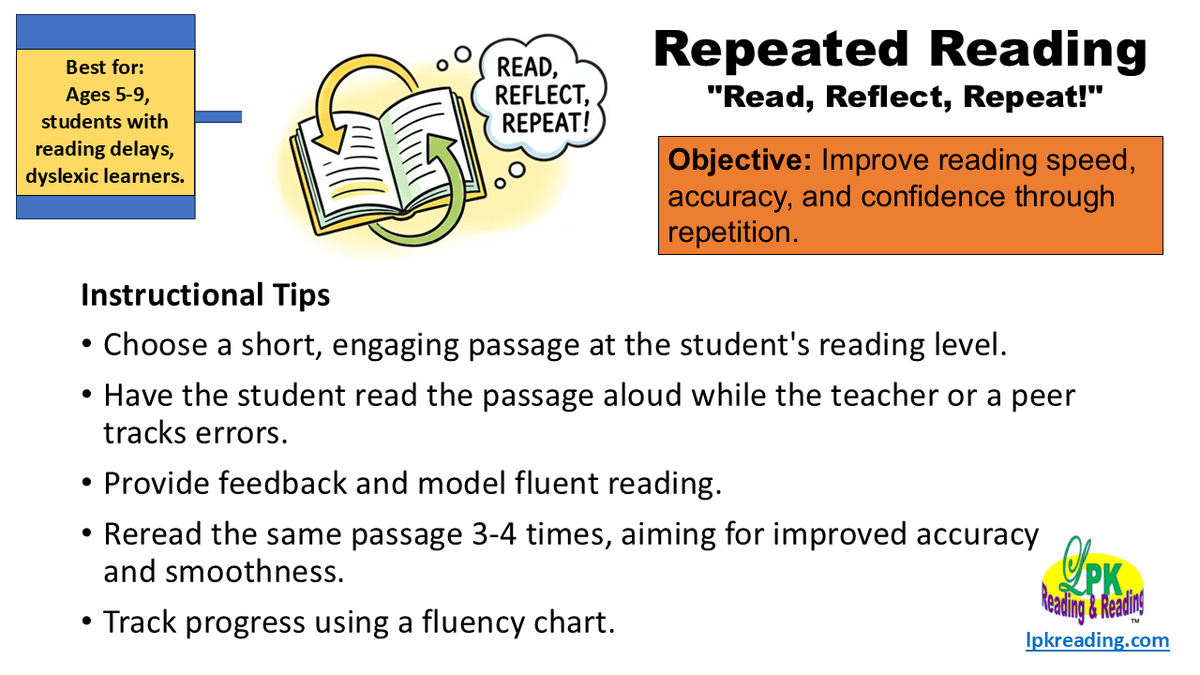
Objective:
Improve reading speed, accuracy, and confidence through repetition. When a student reads a short, manageable passage multiple times, something powerful happens to their neural pathways. The first attempt is often focused heavily on decoding unfamiliar words. By the third or fourth turn, the brain naturally transitions from effortful decoding to automatic recognition. This exercise reduces anxiety for students with reading delays because the text becomes comfortably familiar, building structural confidence that carries over into new reading materials.
1. Select a Short Passage: Target: 50–150 words.
2. First Read & Cold Timing: Establish a baseline.
3. Reflect and Discuss: Brief comprehension check.
4. Repeat and Track Progress: 3 to 4 total reads.
Have the student reread the exact same passage. Celebrate noticeble improvements in
smoothness, emotional expression, and accuracy with each consecutive pass.
2. Paired Reading – "Echo & Lead"
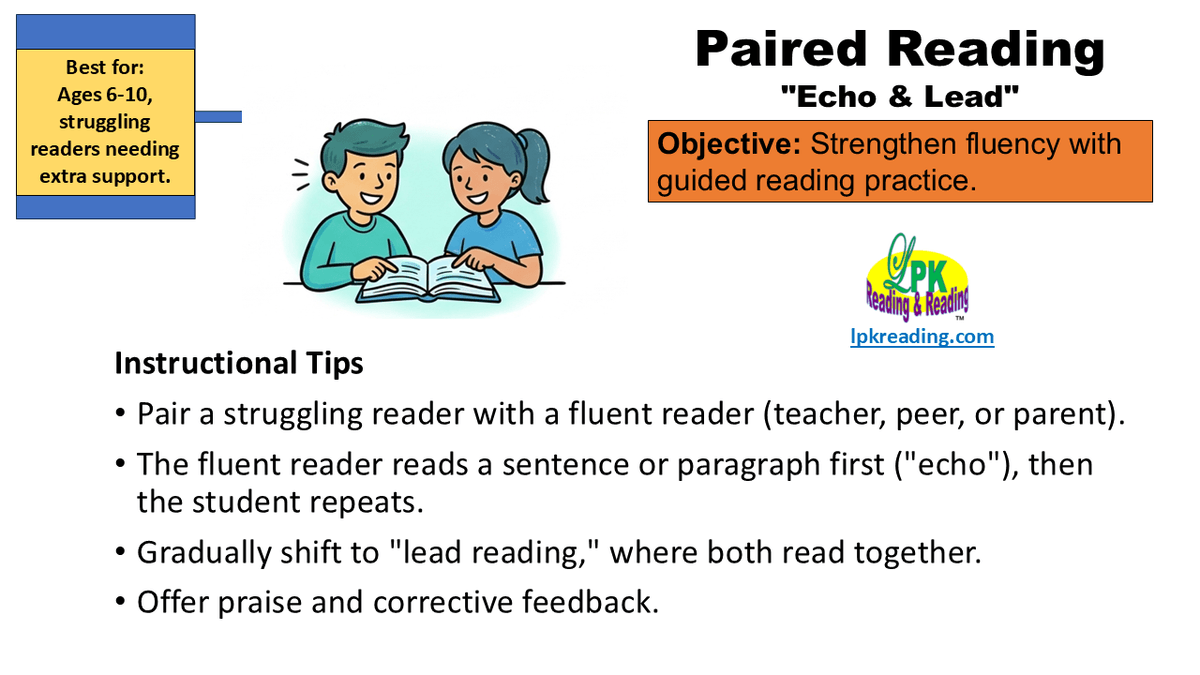
Reading can be an isolating and frustrating task for astruggling student. Paired reading introduces a collaborative, low-stakes environment where a child is scaffolded by a stronger reader. By listening to a model and immediately replicating it, the student absorbs correct pronunciation and pacing in real time, easing the anxiety of reading alone.
Objective:
Strengthen fluency with guided reading practice. Paired reading is a highly collaborative strategy that pairs a developing reader with a fluent guide—such as a teacher, parent, or proficient peer. This approach provides an immediate safety net for students with reading delays; it removes the fear of public failure because the student is supported in real-time by a partner's voice. By tracking words simultaneously, the student absorbs correct pronunciation, pacing, and phrasing patterns without feeling singled out.
Ensure both readers have a clear view of the same text. Establish a non-verbal signal
(like a gentle tap on the page) for when the student wants to read completely solo.
Begin reading the text aloud together at the exact same time. The fluent guide should
match the student's pace but maintain an accurate, expressive rhythm.
When the student feels confident, they give the non-verbal signal. The fluent guide
stops reading aloud and listens attentively while tracking with their finger.
4. Re-enter to Support: Correction within 4 seconds.
If the student hesitates or mispronounces a word for more than 4 seconds, the
guide reads the word correctly, the student repeats it, and they resume reading
in unison.
3.Choral Reading – "Read Together, Grow Together"
Objective:
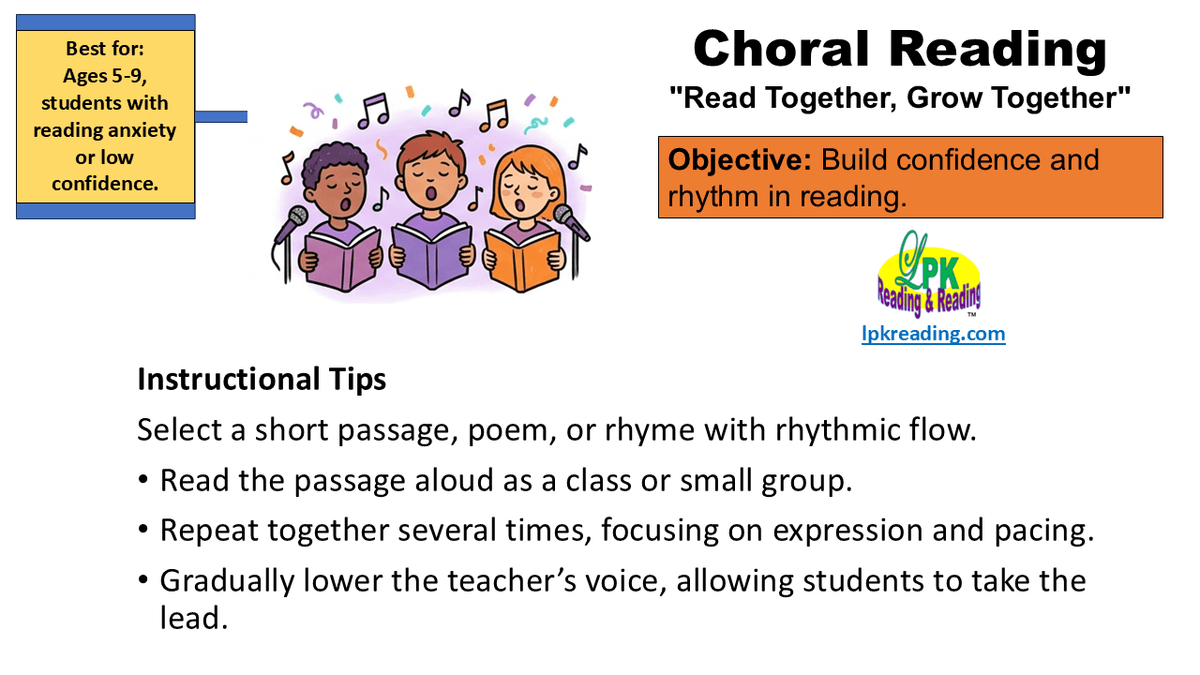
Build confidence and rhythm in reading. Choral reading involves anentire group or class reading a passage aloud in unison. For students who experience reading delays or low confidence, individual oral reading can feel intensely threatening. Choral reading creates a "safety in numbers" environment where struggling voices blend seamlessly with stronger ones. This allows developing readers to practice the natural cadence, phrasing, and pauses dictated by punctuation without the fear of making an isolated mistake.
1. Select and Display Text: Ensure clear visibility.
2. Teacher Models the Text: Demonstrate oral phrasing.
3. Establish a Collective Cue: Sync the group.
Give a clear, rhythmic countdown (e.g., "Ready, set, let's read") so the entire group starts precisely at the exact same moment.
4. Read Aloud in Unison: Keep voices blended.
Lead the group through the text. Move around the room to gently support the collective pace, ensuring the reading sounds like a unified choir rather than a disjointed race.
Objective:
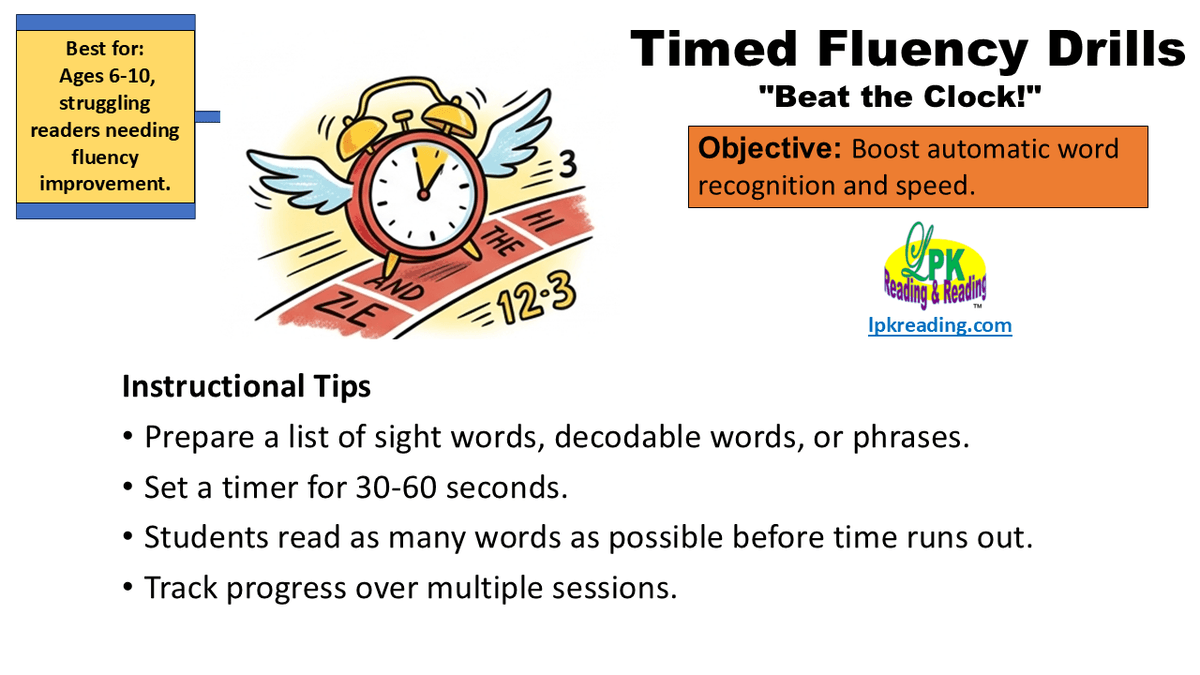
Boost automatic word recognition and speed. Timed drills turn fluency building into a gamified, self-competitive challenge. Rather than comparing themselves to other students, learners focus entirely on beating their own previous scores. This exercise is particularly effective for trackable metrics
like Words Correct Per Minute (WCPM). For students with reading delays,visual tracking charts offer clear proof that their hard work is paying off, transforming reading from a stressful chore into an achievable target.
Give the student a passage and set a countdown timer for exactly 60 seconds. Remind them that accuracy is far more important than frantic speed.
Instruct the student to begin reading. On your copy of the text, subtly draw a line through any omitted, substituted, or mispronounced words.
3. Mark the Finish Line: Stop at the beep.
When the timer sounds, have the student place a bracket around the very last word they read.
4. Calculate and Chart: Visualize progress.
5. Sight Word Recognition Challenge – "Flash & Dash"
Objective:
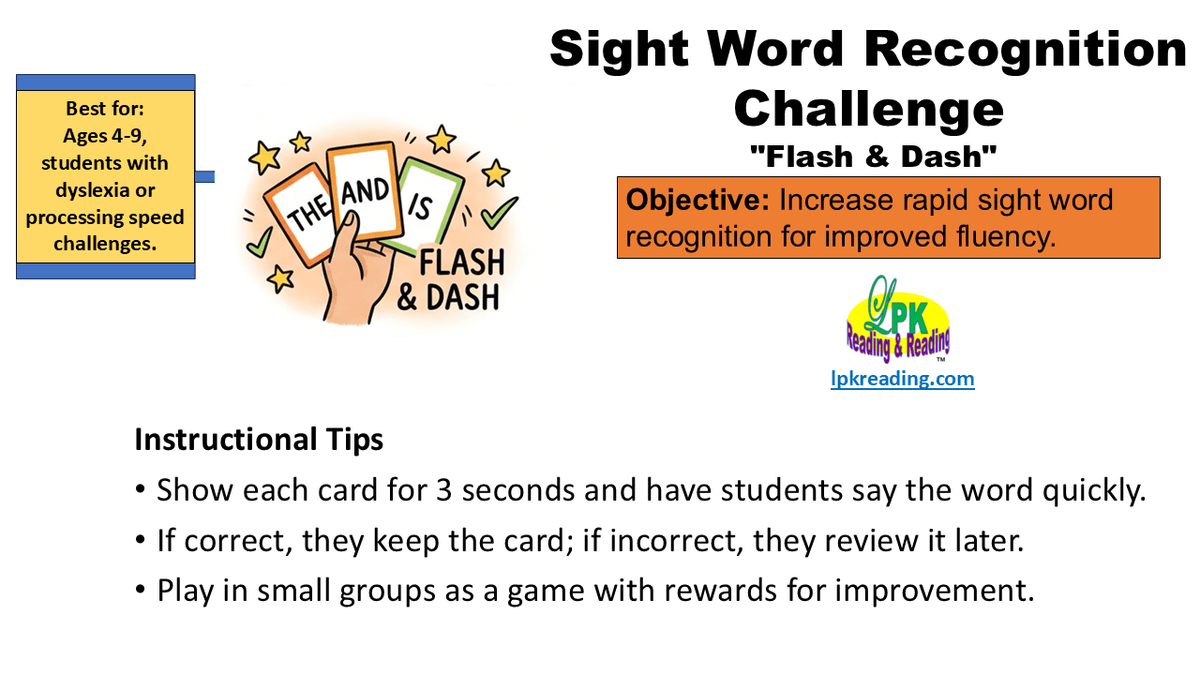
Increase rapid sight word recognition for improved fluency. Sight words (or high-frequency words) represent up to 75% of the words found in children's printed material. Many of these words do not follow traditional phonetic rules (such as "the", "was", or "said") and must be recognized instantly on sight. By building automaticity with these foundational words, developing readers stop stumbling over recurring vocabulary, which immediately smooths out their overall reading pace.
1. Curate Your Deck: Limit to 10–15 cards.
2. Execute High-Speed Flash: Under 3 seconds per card.
Flash each card to the student. The goal is for them to say the word instantly without attempting to sound out the phonetic components.
3. Sort Into Sorting Piles: Instant vs. Hesitant.
Create two piles as you flash: one for instant recognition (under 3 seconds) and another for words where the student paused, guessed, or struggled.
4. Provide Target Reinforcement: Immediate corrective loop.
Take the hesitant pile, review the correct pronunciations together, and run through that specific subset one more time to close out the session on a successful note.
Conclusion & Holistic Experiences: Stakeholders; The Experience & Impact; Key Outcomes
Developing true reading fluency is rarely a solitary achievement; it relies heavily on a supportive triad formed by the student, the teacher, and the parent. When these fluency exercises are applied consistently, the transformations across the board are profound.
The Student
Shifts from a mindset of dread and fatigue to one of discovery and empowerment. As decoding hurdles disappear, reading transforms from a stressful academic chore into a rewarding window into stories and knowledge.
- Outcomes: Increased confidence, reduced reading anxiety, higher comprehension, and independent self-correction.
The Teacher
Gains precise data to target specific instructional interventions. Instead of watching a student struggle endlessly with a heavy textbook, teachers witness real-time daily growth using focused, structured routines.
- Outcomes: Improved classroom data metrics, more effective small-group instruction, and an inclusive classroom culture.
The Parent
Moves away from frustrating homework battles and evening tears. Guided, predictable exercises like paired reading give parents actionable, clear tools to support their child at home without acting like a harsh grader.
- Outcomes: Stronger emotional bonds over shared books, reduced home friction, and clear visibility into daily learning growth.
Fluency is not an end goal in itself; it is the gateway to understanding. When an educator, parent, and student work together using these systematic exercises, they give a child a fundamental right to read, comprehend, and confidently direct the world around them.